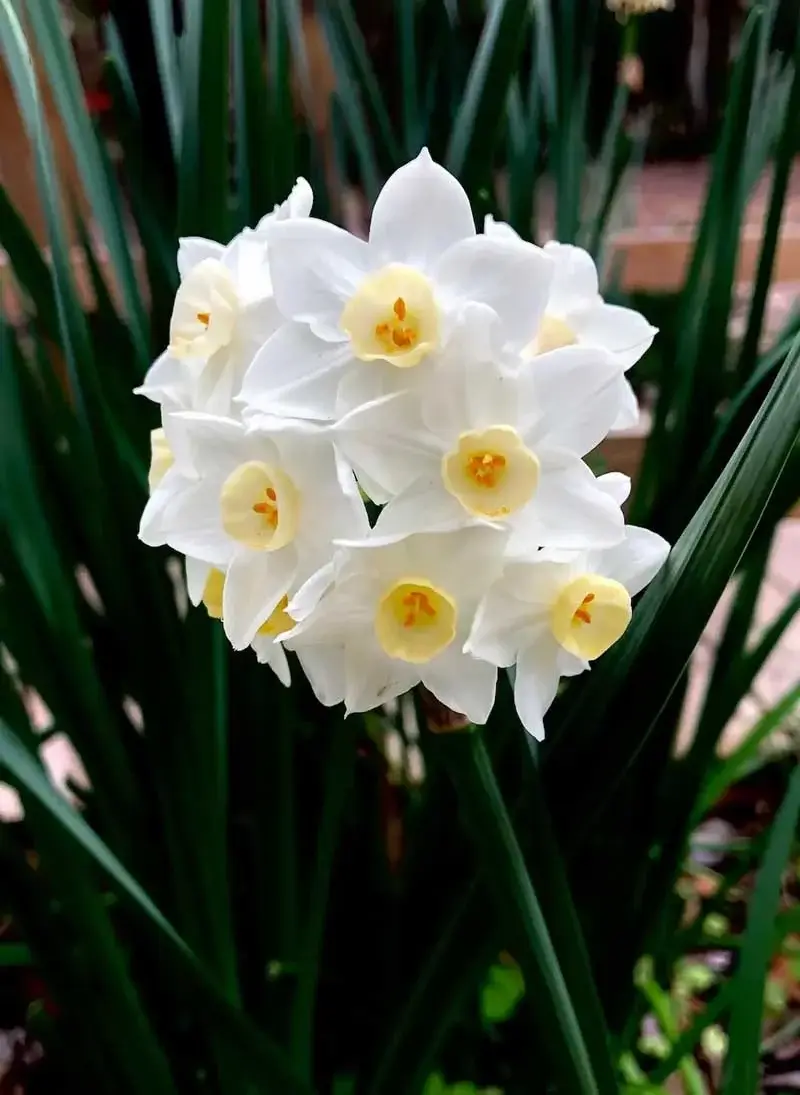
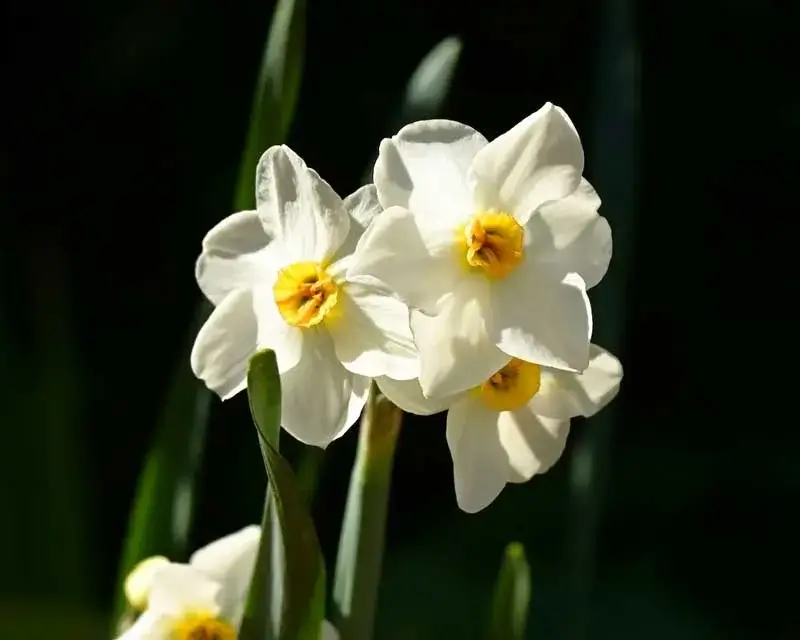

Have you ever brought home a bowl of paperwhites only to watch them shoot up overnight, lean toward the window and fill the room with that unmistakable… scent? These bulbs are daffodils, but they behave nothing like the sturdy spring flowers we grow in Canadian soil. Paperwhites follow their own rhythm. They wake up the moment they touch water, race through their bloom cycle and fill the darkest weeks of winter with brilliant white flowers. Their quirks make them both charming and exasperating, and knowing why they behave this way makes them far more fun to grow.
1. They are true daffodils with no outdoor future here
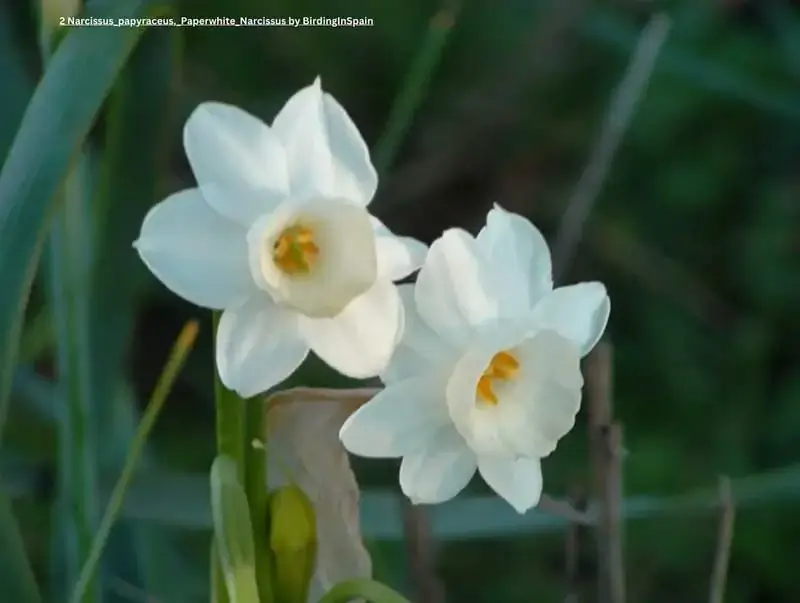
Paperwhites are Narcissus papyraceus, a type from Spain adapted to Mediterranean winters. They never evolved the cold tolerance of hardy daffodils. Once they finish blooming indoors, the bulbs are exhausted and cannot rebuild enough energy to survive a frost. In fact, the bulbs are tender and perish at 0 Celsius.
2. Their life cycle depends on a dry summer shutdown
3. Their blooms are already formed inside the bulb before they reach you
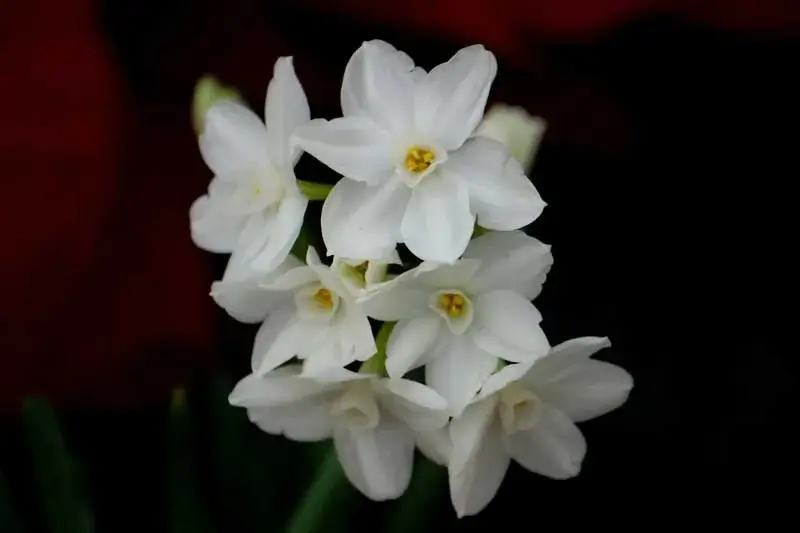
By the time paperwhite bulbs are harvested in late summer, their “flower primordia”, which are the embryonic flower buds for the coming season, are fully developed. The bulb has done all the internal work months earlier in the field. When you add water at home, you are not prompting the plant to start making a flower. You are simply waking up a bulb that already contains next month’s bloom.
4. Their fragrance is distinctive for a reason
Paperwhites have a fragrance that is unmistakable once you know it. It is strong, sweet at first breath and then quickly shifts into something sharper. Many people compare it to jasmine mixed with a faintly animal note. There is a richness that can feel almost heady in a warm room. The scent comes from higher levels of indole and related compounds. I don’t care for the smell. If you hate the smell but love the blooms, try keeping the pot in a cooler, airy room where it won’t smell as strong.
5. Water forcing
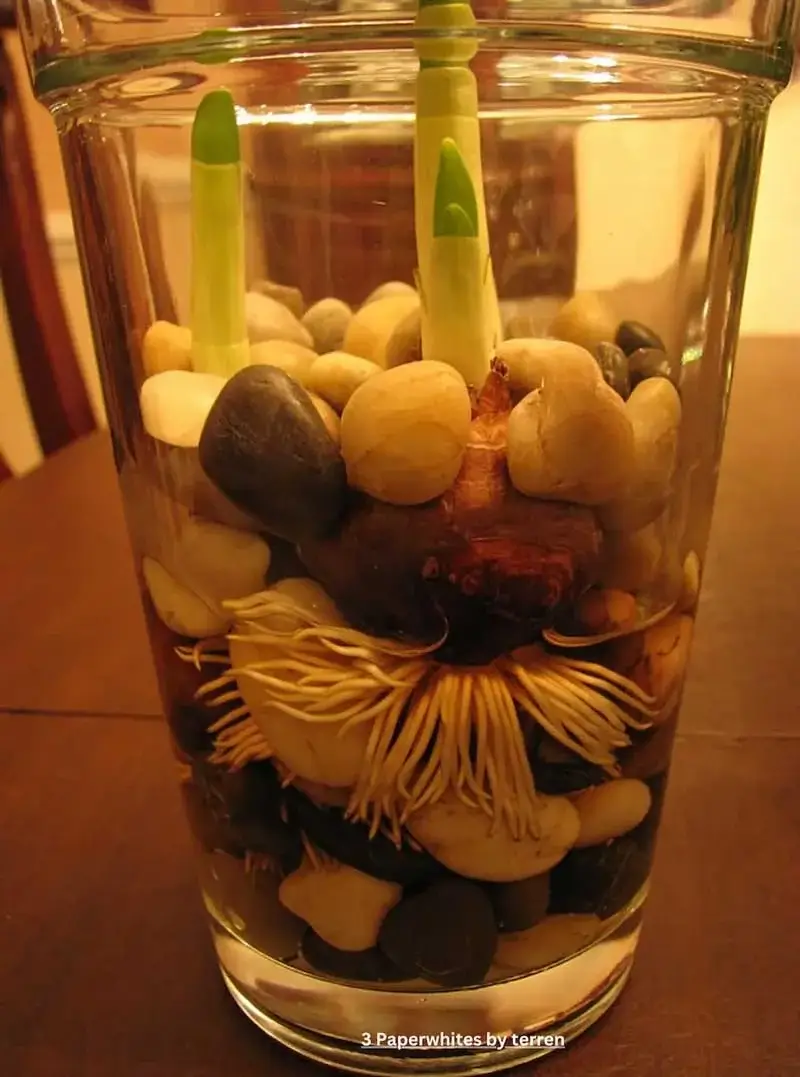
Paperwhite roots form quickly the moment they receive moisture and remain active only for a short window. In fact, the will bloom in water alone. They do not rebuild steadily through cool soil the way hardy daffodil roots do in autumn. Instead, they make a fast, shallow root system designed for brief winter growth in mild climates.
6. They shoot up quickly in warm rooms
Indoor heat accelerates elongation, which is why they sometimes look like they’ve grown while you slept. Cooler rooms moderate the speed and produce sturdier stems. And, of course, it tempers the fragrance.
7. They lean because of low light
Paperwhites stretch when the light is weaker than the growth rate the warmth encourages. The stems lengthen faster than they can support themselves, so they begin to bow, first with a gentle bend at the base and then with a full arc toward the brightest window in the room. The leaves follow the same pattern, rising upright at first and then collapsing outward as the weight of the developing flower cluster pulls them off balance. A brighter spot or a slightly cooler room slows that elongation and keeps the stems firm. You can also place twigs in the pot to help keep them up.
8. The alcohol method works
Research from Cornell University confirmed that a weak alcohol solution of about five percent limits cell elongation in the stems. The flowers develop normally, but the stems stay shorter and stronger. To get five percent alcohol from a 40-proof bottle of vodka (or whisky or gin), mix one part of vodka to seven parts of water. Don’t give them a stiffer drink because that will dehydrate your paperwhites.
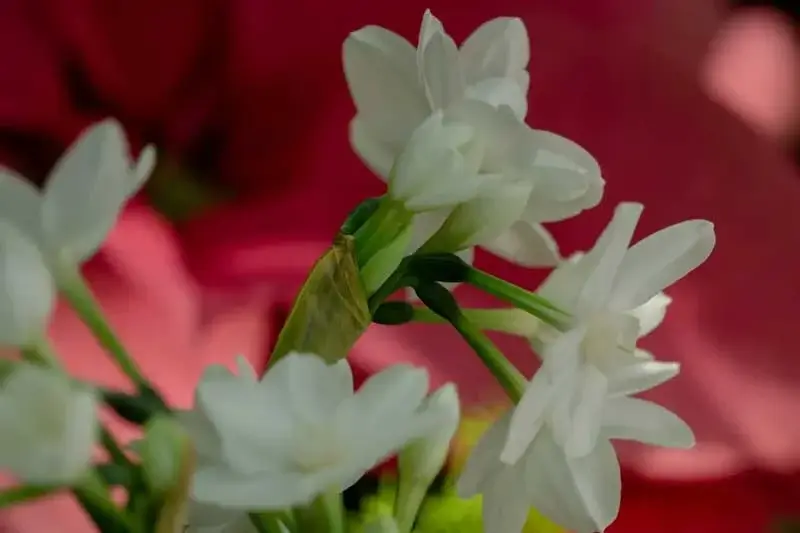
9. They are best treated as seasonal decor
Since the bulb cannot recover after blooming, most gardeners enjoy paperwhites as temporary winter display of life. Once the flowers fade, the bulbs have completed their cycle.
10. They can be staged for steady winter bloom
Because they grow on a predictable schedule, you can start them in batches every week or two to keep fresh flowers coming through December and January.