Thursday, March 12, 2026
10 Neat ThingsAnimalsBirdsWild Critters

10 neat things about migrating birds


Every autumn, migrating birds in Canada take to the air in one of nature’s grandest spectacles. From tiny warblers to massive pelicans, billions of travellers take off, guided by instinct, weather, and the pull of the seasons. Their stories span continents and oceans, revealing how attuned these creatures are to the rhythms of the planet.

1. Billions take flight

Each autumn, billions of birds leave Canada for warmer regions—part of an estimated three to five billion that fill our skies during summer. The boreal forest alone hosts more than a billion nesting birds. When daylight shortens and food dwindles, they begin the long journey south, some crossing entire continents or oceans to reach their winter homes.

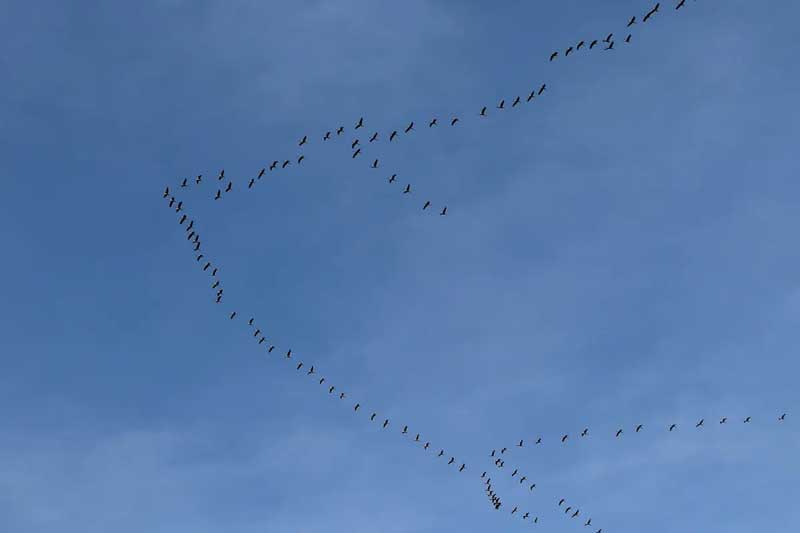
messy vee of canada geese against blue sky

2. The world’s greatest traveller

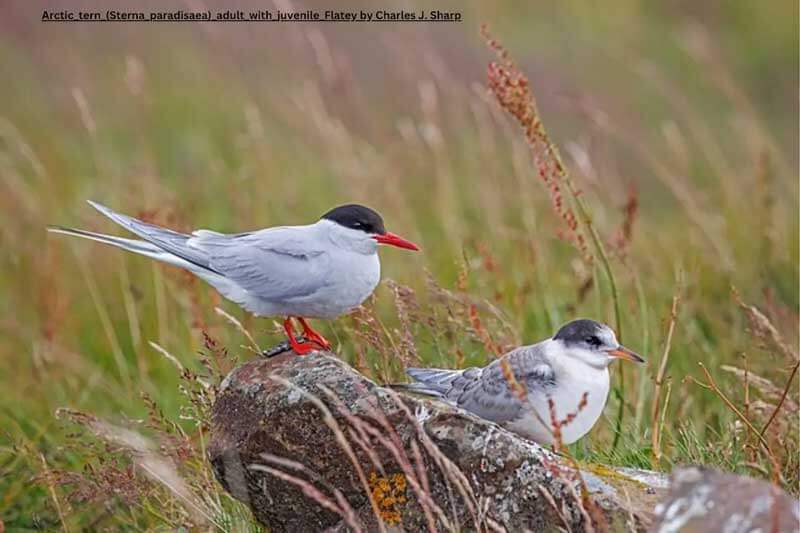
The Arctic tern, which breeds along Canada’s northern coasts, migrates farther than any other animal on Earth. Each year it travels up to 80,000 kilometres, from the Arctic to Antarctica and back again. In doing so, it lives almost entirely in daylight, chasing summer from pole to pole.

two arctic terns, adult and juvenile, on rock in field

3. The purpose of the flyways

Migrating birds follow four great aerial highways: the Pacific, Central, Mississippi, and Atlantic flyways. These routes trace coastlines, mountain ranges, and river valleys that offer landmarks, feeding grounds, and steady tailwinds. They’re not imposed paths but ancient natural corridors that connect Canada’s nesting grounds with southern winter refuges, generation after generation.

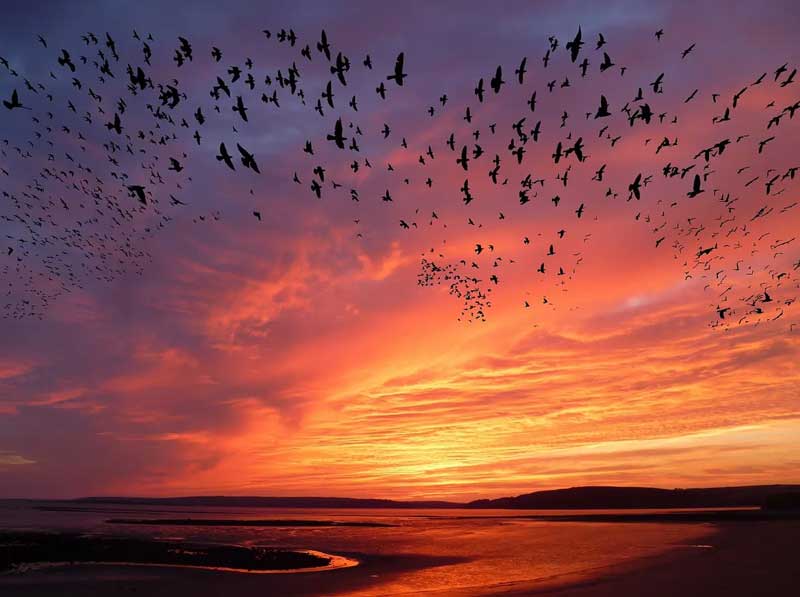
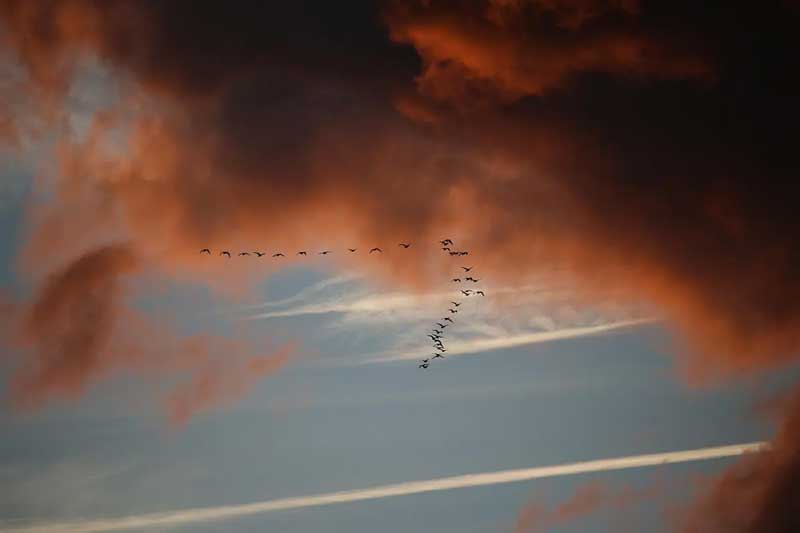
flock of birds peppered across a colourful sky

4. The tiny transoceanic flyer

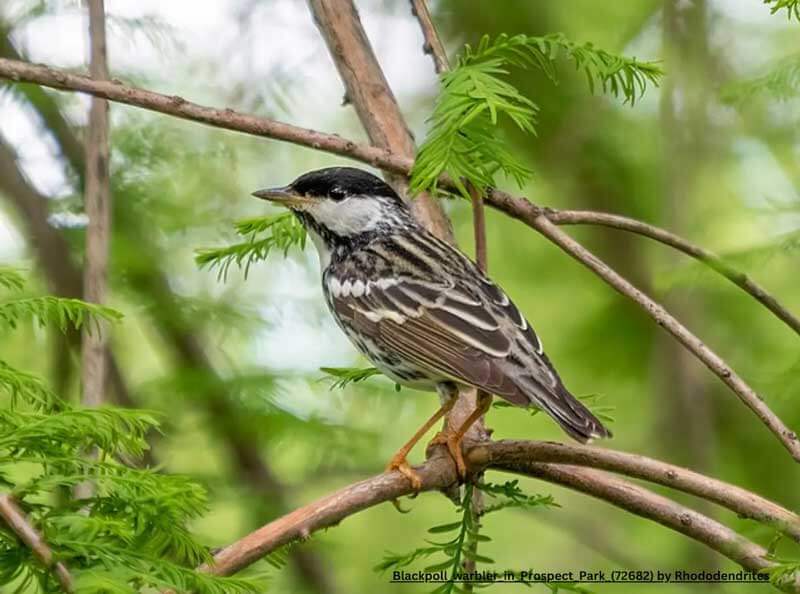
The blackpoll warbler, smaller than a sparrow, breeds across Canada’s boreal forest. Each autumn, it gathers along the Atlantic coast, then flies up to 3,000 kilometres nonstop over the ocean to South America. Some banded in central Canada have been tracked to Venezuela and Brazil, which is an epic journey for a bird weighing less than two loonies.

profile of blackpoll warbler in branches of dawn redwood

5. The hummingbird’s miracle flight

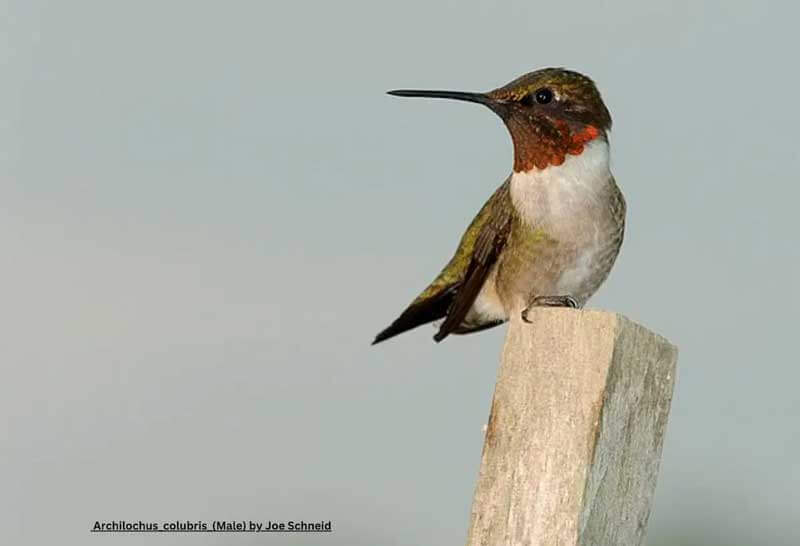
The ruby-throated hummingbird, our eastern species, crosses the Gulf of Mexico—an 800-kilometre journey—often in one continuous flight. It powers itself (as all hummingbirds do) with a figure-eight wing motion that produces lift on both strokes, giving perfect control even in wind. Before migration, it doubles its body weight in fat, then burns it off entirely in about 20 hours of flight.

ruby throated hummingbird still on a post

6. Robins follow food, not warmth

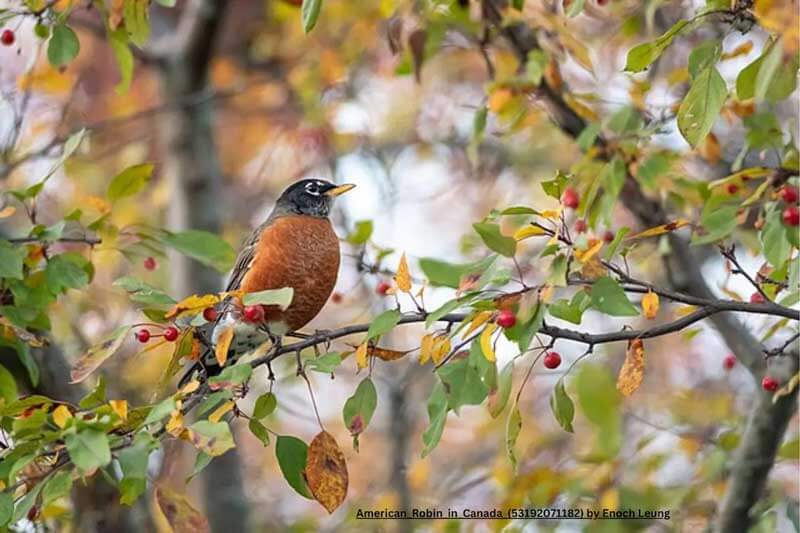
American robins migrate when the ground freezes, not when it turns cold. They can tolerate frost but can’t dig for worms through ice. Those that stay north in winter survive on berries from dogwood, mountain ash, and crabapple trees, roaming in large flocks until the thaw brings insects back to the surface.

American robin in crabapple tree

7. Pelicans: two species, two ways to travel

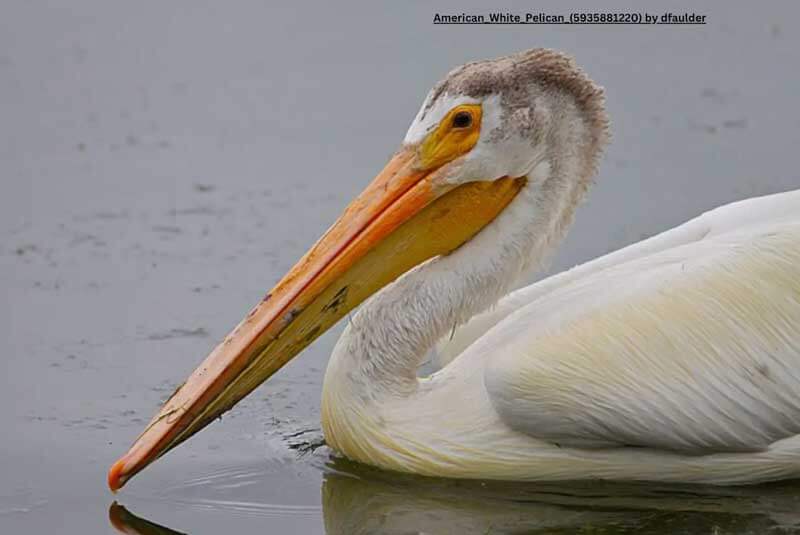
Canada’s American white pelicans are inland migrants, flying from Prairie and northern lakes to the Gulf of Mexico each autumn. Their coastal relatives, the brown pelicans rarely leave the warm seas of BC and the Maritimes. White pelicans soar on thermals high above the land and fish cooperatively in shallow water, while brown pelicans dive headfirst into surf and seldom need to migrate far.

side view of american white pelican in water

8. When weather turns wild

Birds can sense approaching storms through changes in barometric pressure. Many delay departure until conditions calm, while others flee hours before a major storm arrives, hoping to stay ahead of it. Still, some are swept off course. Hurricanes can send frigatebirds, from Florida and Mexico, off course. Arctic terns have been carried inland for thousands of kilometres.

grey-green ocean and cliffs below a sky full of clouds that are friendly nearby turning to stormy in distance

9. Gardens as rest stops

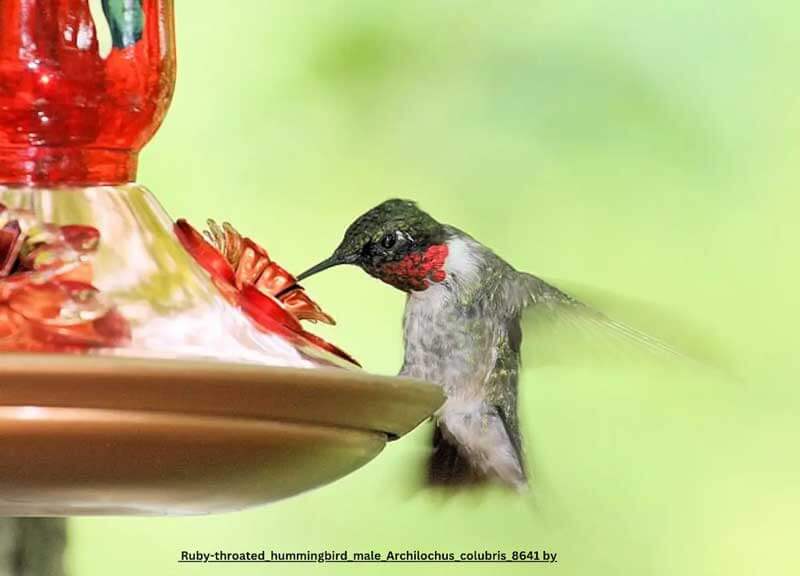
Migrants need fuel. Late berries on native shrubs such as viburnum, dogwood, and highbush cranberry help birds replenish energy during migration. Even a small yard with trees or a birdbath can serve as a critical stopover. Reducing outdoor lighting at night helps them navigate safely through cities.

ruby-throated hummingbird sipping from a re feeder

10. How to follow the flocks

With tools like Birds Canada’s Project FeederWatch and eBird, anyone can track migrations in real time. These citizen-science projects help researchers understand changing routes and timings as the climate shifts. Watching migration is more than a pastime—it’s a national spectacle unfolding every autumn above our heads.

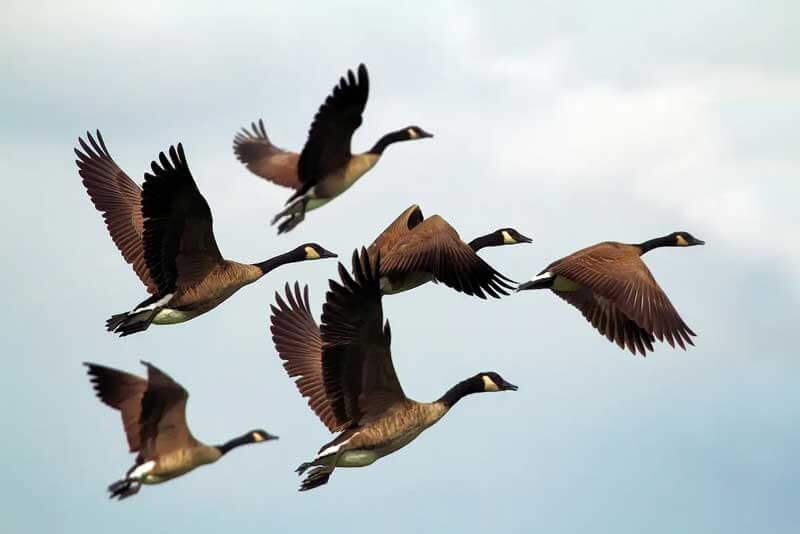
side view of six canada geese flying in a grey sky