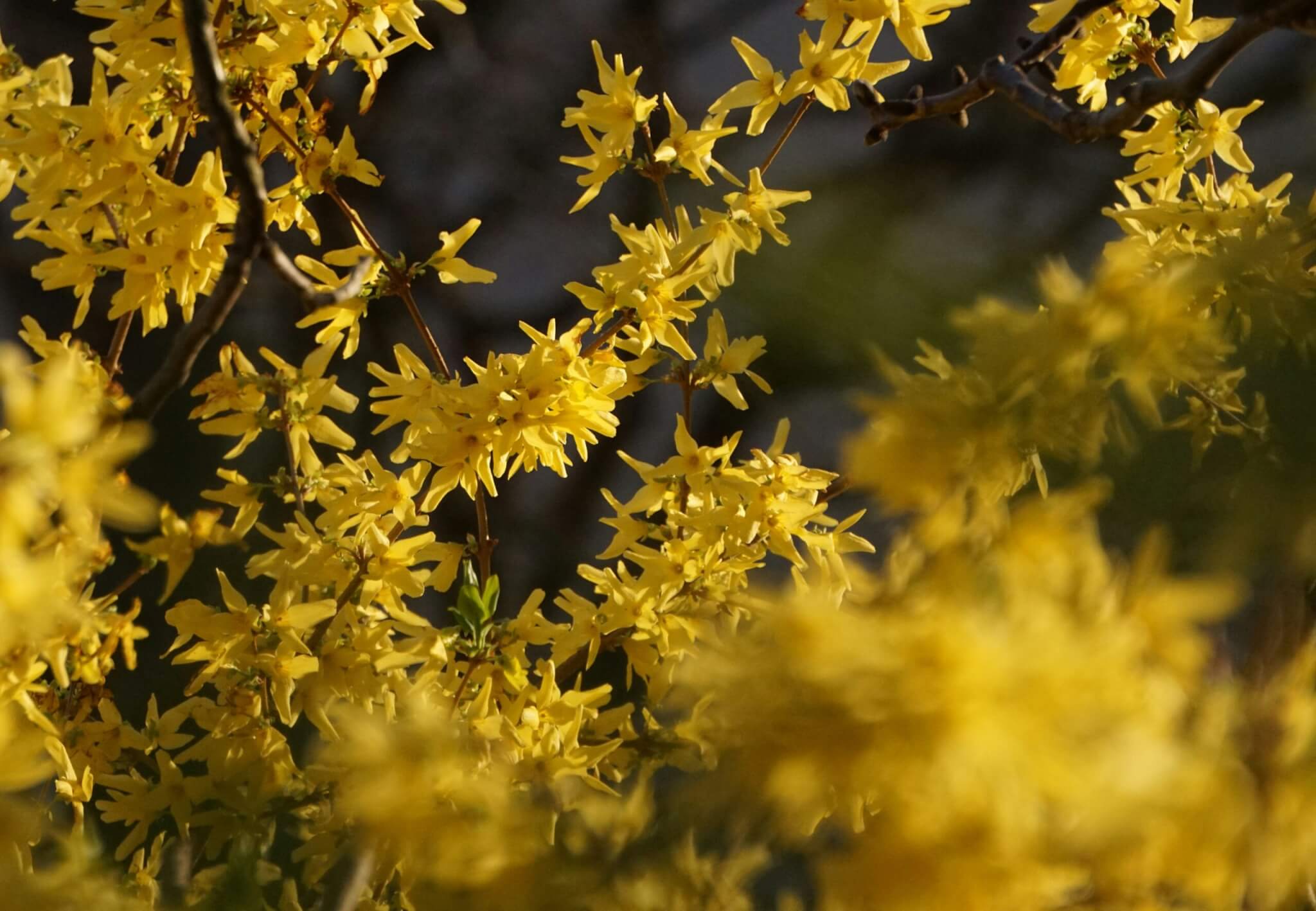

Forsythia, with its vibrant yellow blooms that emerge before the foliage, heralds the arrival of spring, brightening gardens even before the rest of the landscape awakens from its winter slumber. This hardy, easy-to-grow shrub is a favorite among gardeners for its low maintenance and high impact.
These shrubs have deep and extensive root systems and they are extremely hardy. The problem is that, while the shrub will survive to -39 Celsius, the flower buds will not (necessarily). In Zones 3 or 4, be prepared for some years with no blooms or blooms only on the bottom, where the branches were covered in snow.
Nonetheless, the absolute cheeriness of those bright yellow blooms when you do get them make forsythia a worthy shrub for any Canadian garden in Zone 3 and above and even worth the risk in Zone 2. And when you don’t get flowers, it is a nice-looking, if slightly dull, shrub.
Forsythia is named for William Forsyth, a Scottish botanist and one of the founding members of the Royal Horticultural Society. The plant itself, however, was brought to Europe from China by Robert Fortune in the mid nineteenth century. It was already a long established garden plant in Asia, valued for its early bloom and reliability.
Choosing a Forsythia Variety
In the lower zones, Forsythia x intermedia ‘Northern Gold’ is the most reliable option, with buds able to withstand temperatures down to -39. Developed by Agriculture Canada, it is almost guaranteed to bloom at Zone 3 every year. There is also ‘Meadowlark’, good to -35 Celsius, and ‘Northern Sun’, whose buds can be relied on down to -30 Celsius. ‘New Hampshire Gold’ is good to Zone 4 or 5.
When living in Toronto, I had a lovely variety with a variegated leaf that I believe was F. viridissima ‘Kumson’, which is hardy to Zone 5 or 6. Others had a groundcover style variety called ‘Happy Centennial’, also hardy starting around Zone 5.
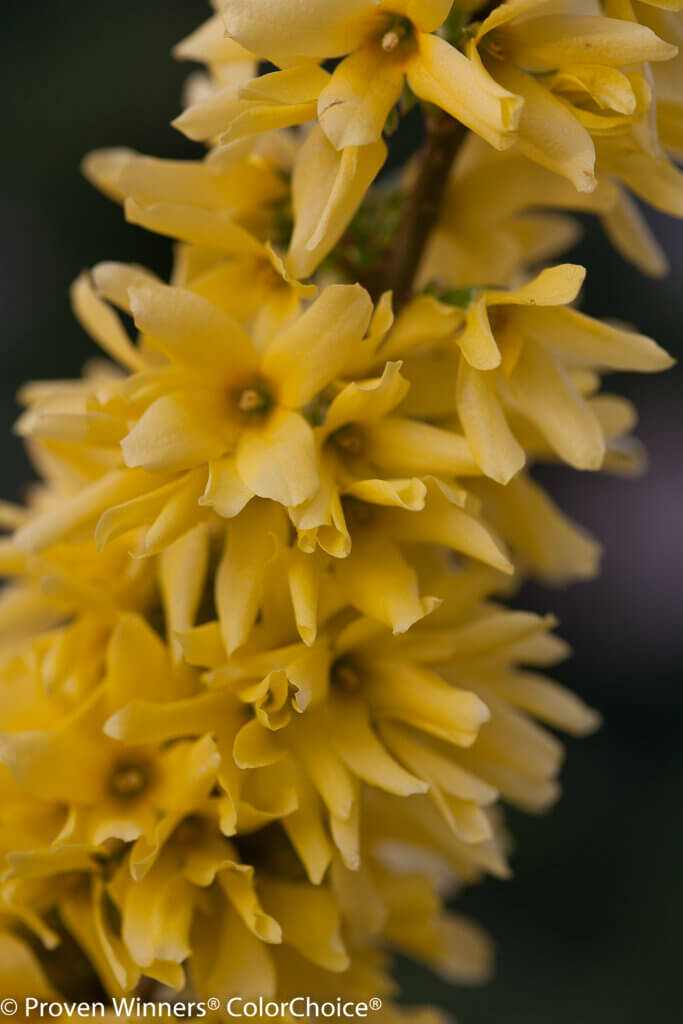
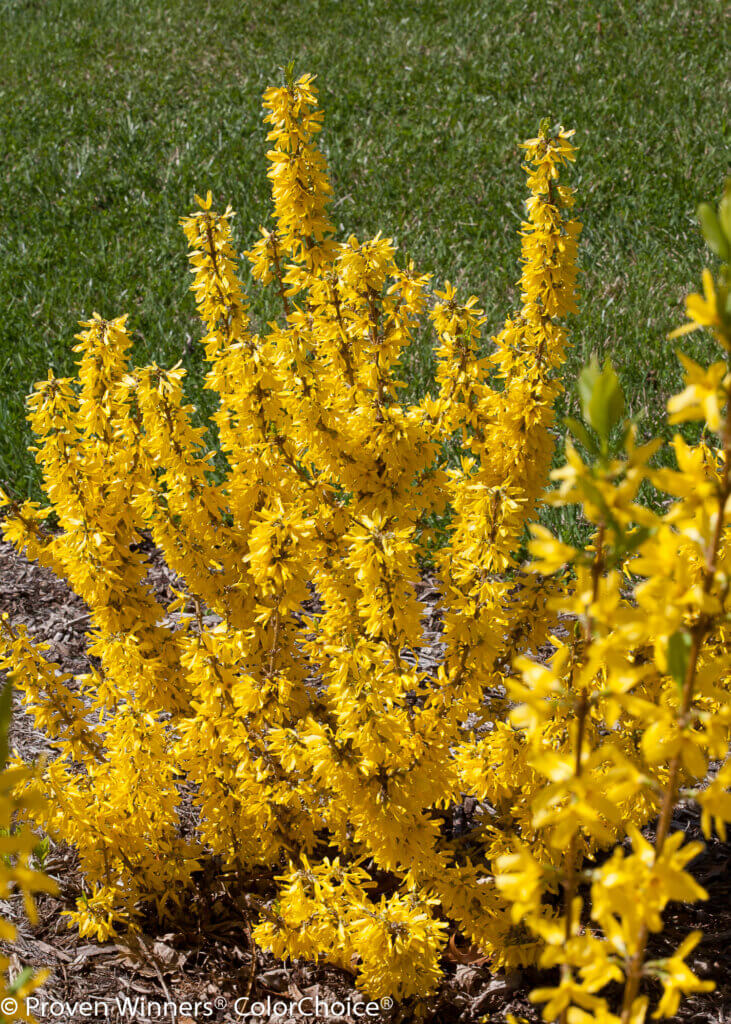
Newer compact varieties are widely marketed for small gardens. ‘Show Off’ reaches about six feet tall and is very floriferous, but its bud hardiness is limited to about USDA zone 5a. ‘Show Off Sugar Baby’ is smaller still, topping out around two to two and a half feet, with similar cold limitations
Planting
The best time to plant forsythia is in the early fall or spring. Choose a location that receives at least four hours of sun per day, as sunlight is crucial for flower production. Forsythia thrives in well-drained soil.
When planting, ensure the hole is twice as wide as the root all but no deeper, to encourage root
growth.
Watering and Fertilization
Water your forsythia deeply after planting and be vigilant about watering for the first couple of growing seasons. Once established, forsythia is relatively drought-tolerant, requiring water only during prolonged dry spells. Apply a balanced, slow-release fertilizer in early spring, just before new growth begins, to support vigorous growth and flowering.
Pruning
You don’t absolutely have to prune your forsythia, but if you do, do it right after flowering because they bloom on old wood. Of course, you should get rid of any dead or sickly branches, and every few years it’s good to thin the center to allow light and air to pass through. If you really want to rejuvenate an old one, cut it to the ground in the fall.
If you choose to prune for a precise shape, you can do it with an electric trimmer; just be prepared for fewer blooms.
Landscaping with Forsythia
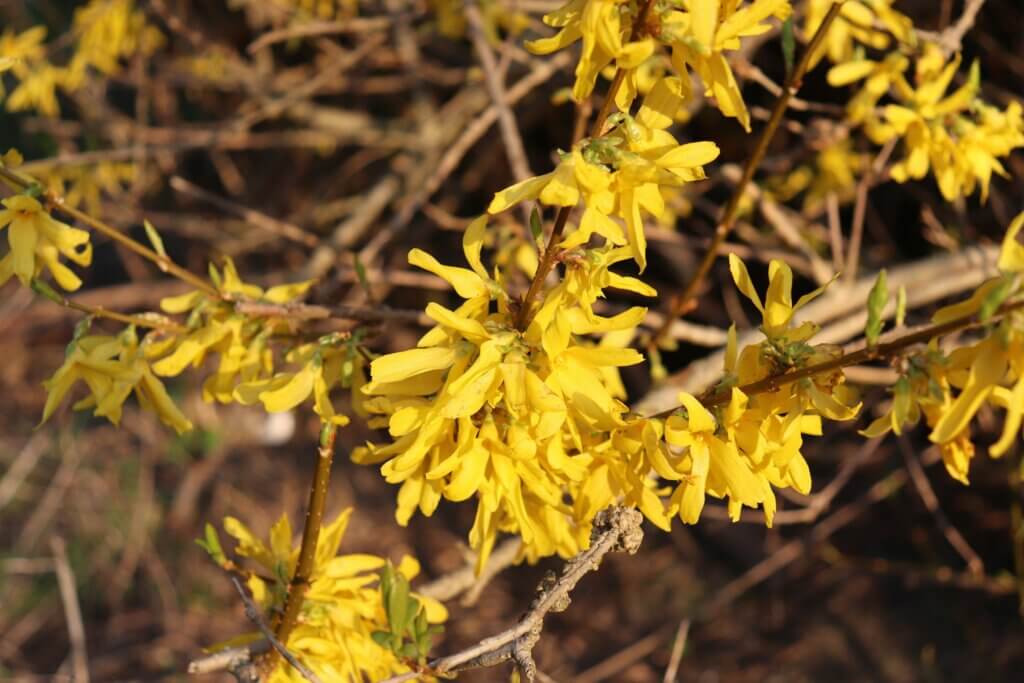
Forsythia can be used in various landscaping designs. Its rapid growth and dense foliage make it an excellent choice for privacy hedges or screens. Smaller varieties are perfect for foundation plantings or mixed borders. For an eye-catching spring display, consider planting forsythia in groups or alongside spring bulbs and other early bloomers.
Cultural Significance
In its native regions of East Asia, forsythia has been celebrated for centuries, not only for its beauty but also for its symbolic meanings. In Chinese culture, for example, the blooming of forsythia flowers is associated with the arrival of spring and the renewal of life. The plant features in traditional festivals and is often depicted in art and literature, symbolizing good fortune and anticipation of warmer days.
In the West, forsythia’s adoption into gardens has also imbued it with cultural significance. Its early bloom times serve as a natural indicator of the changing seasons, often cited in folklore and gardening lore as a sign to begin certain agricultural practices, such as planting certain crops. Years ago, I was told by a neighbour to wait until the forsythia bloomed to prune my roses in the spring.
Posted in CLG Vol 5 Issue 3