Tuesday, March 17, 2026
Editor's PickPlantsTrees & Shrubs

Hemlock tree

When people hear the word hemlock, they almost immediately think of poison. Many associate the name with the drink that killed Socrates for what was deemed to be his corruption of youth by teaching them to question authority. This hemlock, Conium maculatum, is a poisonous plant that grows wild in wetlands across all provinces of Canada. It has nothing to do with the hemlock tree, except that its leaves smell somewhat similar to hemlock needles when both are crushed.

Far from being poisonous, the hemlock tree (Tsuga) has long been used as a food source by First Nations peoples. The inner bark was pounded into a kind of flour and used as a thickener, the gum was chewed, and the needles and small twigs were used as flavouring for chewing gum, soft drinks, and even ice cream. They were also brewed into a delicious herbal tea used to help relieve colds, coughs, and fevers. High in vitamin C, hemlock tea is said to support immune health.

Hemlock was also prized for its high tannin content, which was used in the production of leather from hide.

There are two types of hemlock tree commonly found in Canada: the Eastern hemlock (Tsuga canadensis) and the Western hemlock (Tsuga heterophylla). A third type, the mountain hemlock (Tsuga mertensiana), closely resembles Western hemlock and grows at higher elevations in mountainous regions.


Eastern Hemlock (Tsuga canadensis)

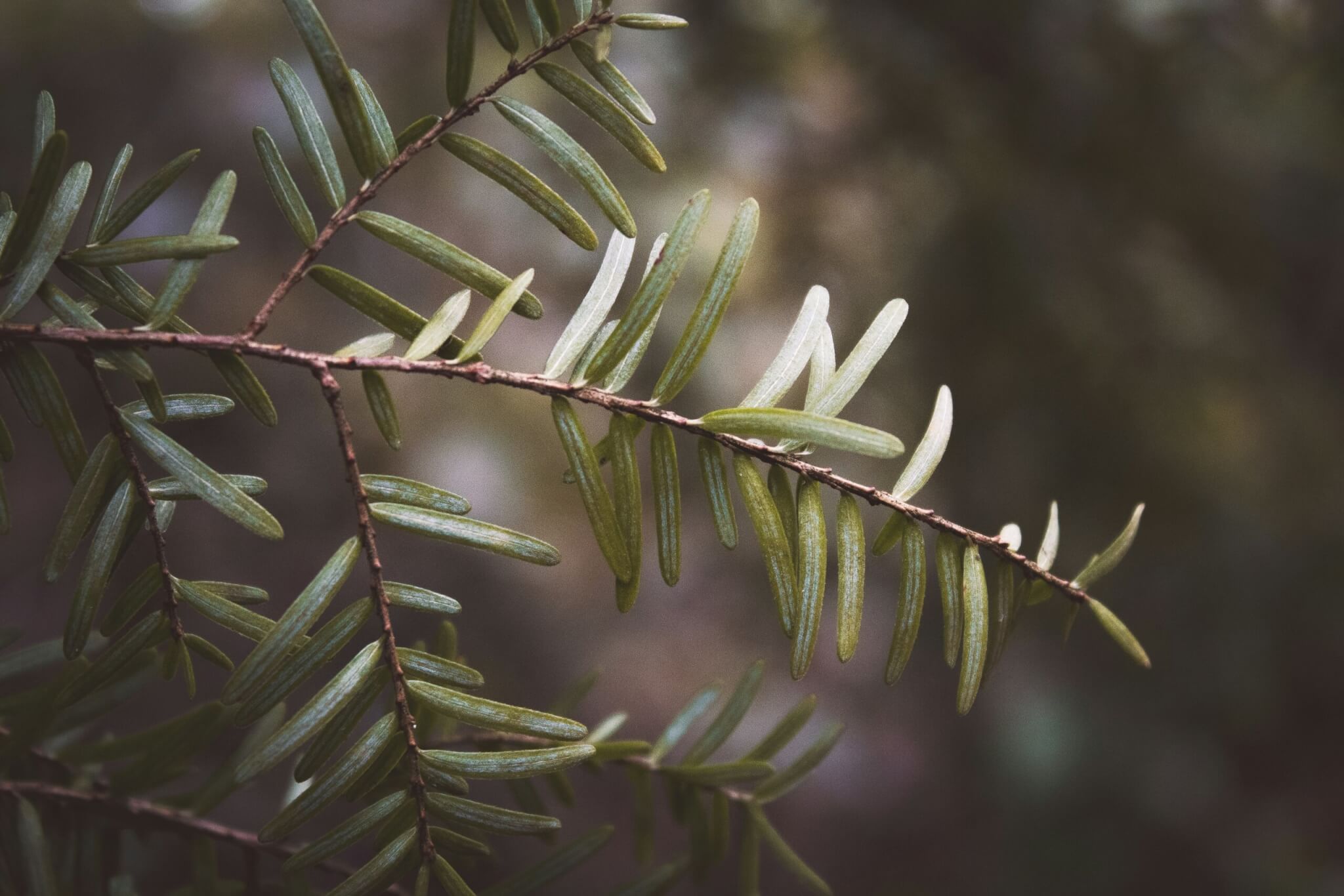
The Eastern hemlock grows from the east coast of Canada to the Ontario–Minnesota border. It has a graceful pyramidal shape and is tolerant of shearing and shaping. The branches grow straight out from the trunk, drooping elegantly at the ends. Its shiny, flat needles with pale undersides fall in lacy sprays. The small cones are only about ¾ of an inch long and remain soft and green until the seeds are released in fall.

Eastern hemlock thrives in part shade and can grow up to 70 feet tall and 25 feet wide. It prefers acidic, well-drained loam or sandy soil. Because its roots are shallow, it is sensitive to drought, so home gardeners are advised to protect the root zone with a thick layer of mulch. It is hardy to Zone 3.

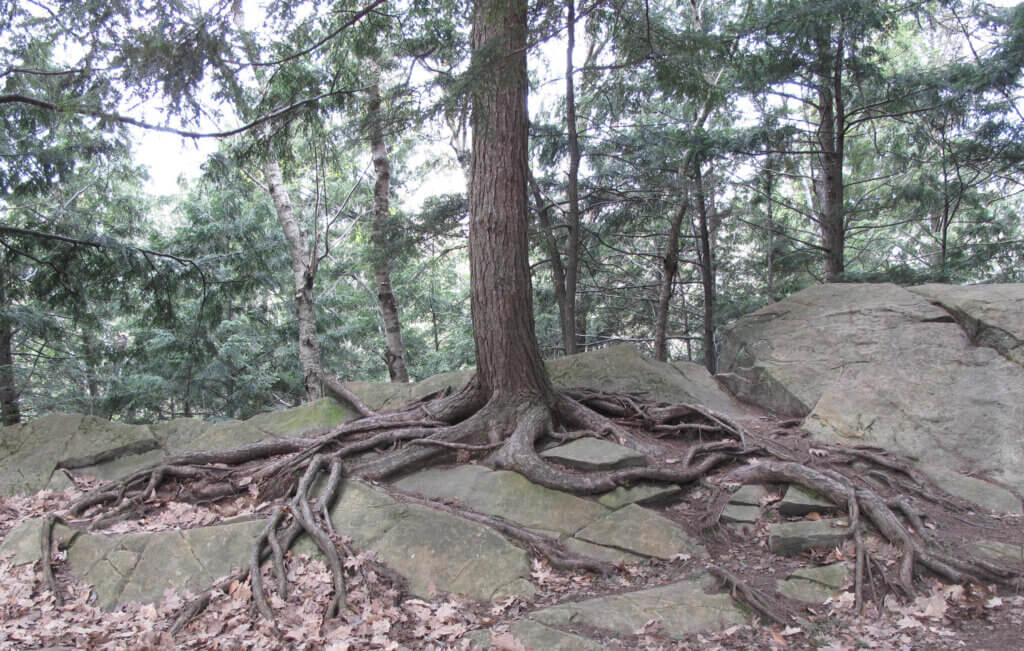
Base of an eastern hemlock growing on rocks.
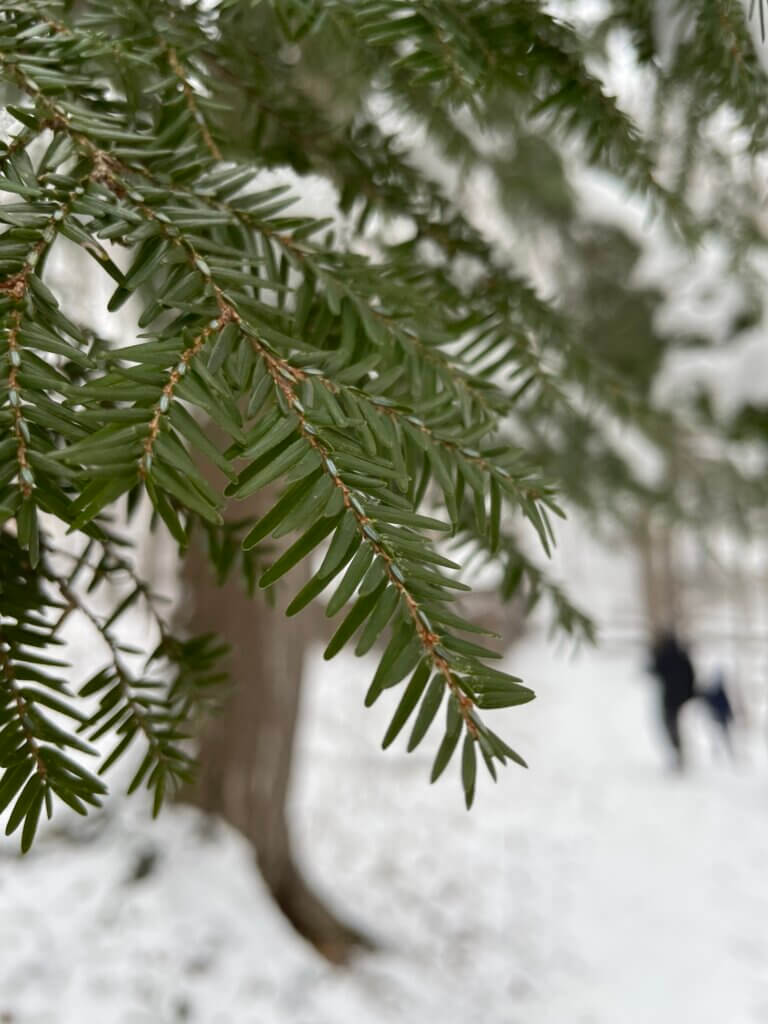
Eastern hemlockcovered in snow
Eastern hemlock branch

Under the right conditions, Tsuga can live for centuries. The oldest known specimen, found in Pennsylvania, lived to approximately 1,500 years. Despite its longevity, Eastern hemlock is slow growing and is considered a threatened species due to overharvesting and attacks from the woolly adelgid, an insect that feeds on the undersides of needles and can kill the tree over time.


Western Hemlock (Tsuga heterophylla)

Western hemlock, also known as Pacific hemlock, is common along the Pacific coast from Alaska to northern California, growing at elevations up to 1,500 feet.

It typically reaches heights of 50 to 80 feet but can grow as tall as 200 feet, with a spread of 25 to 40 feet. While it generally lives 80 to 100 years, some reports suggest it can live much longer. The flexible top of the tree bends away from strong winds. Like its eastern counterpart, Western hemlock does not tolerate drought or prolonged heat, preferring the cool, damp forests of Pacific North America.

Western hemlock often grows as a dominant species, either alone or in the understory of Douglas fir, grand fir, or western red cedar. It grows slowly when young but accelerates as it matures.

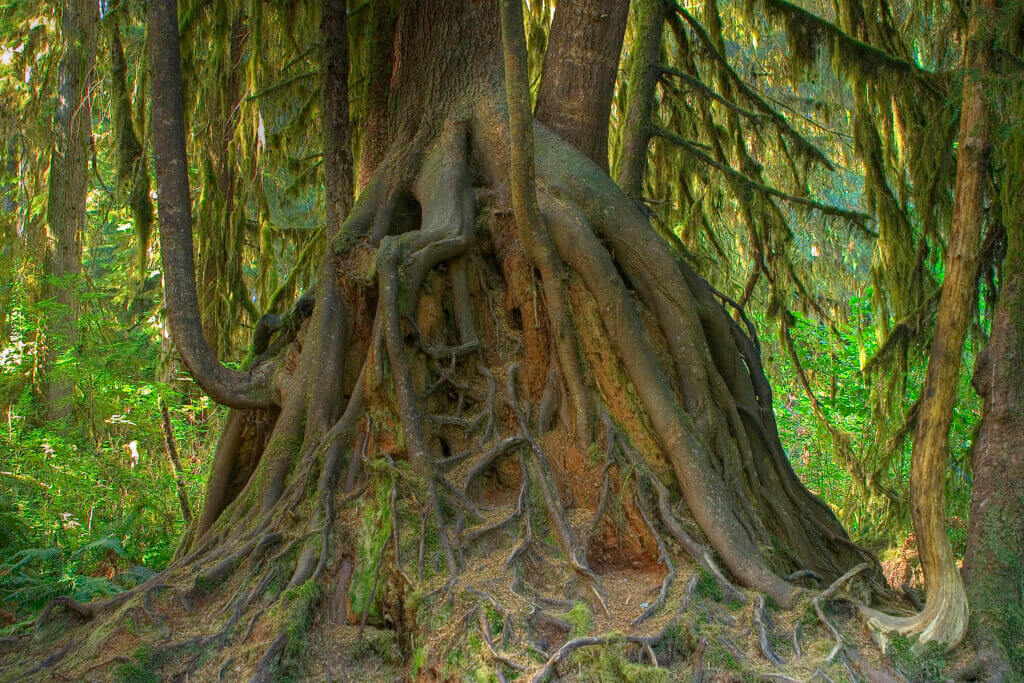
Western hemlock growing on a stump.
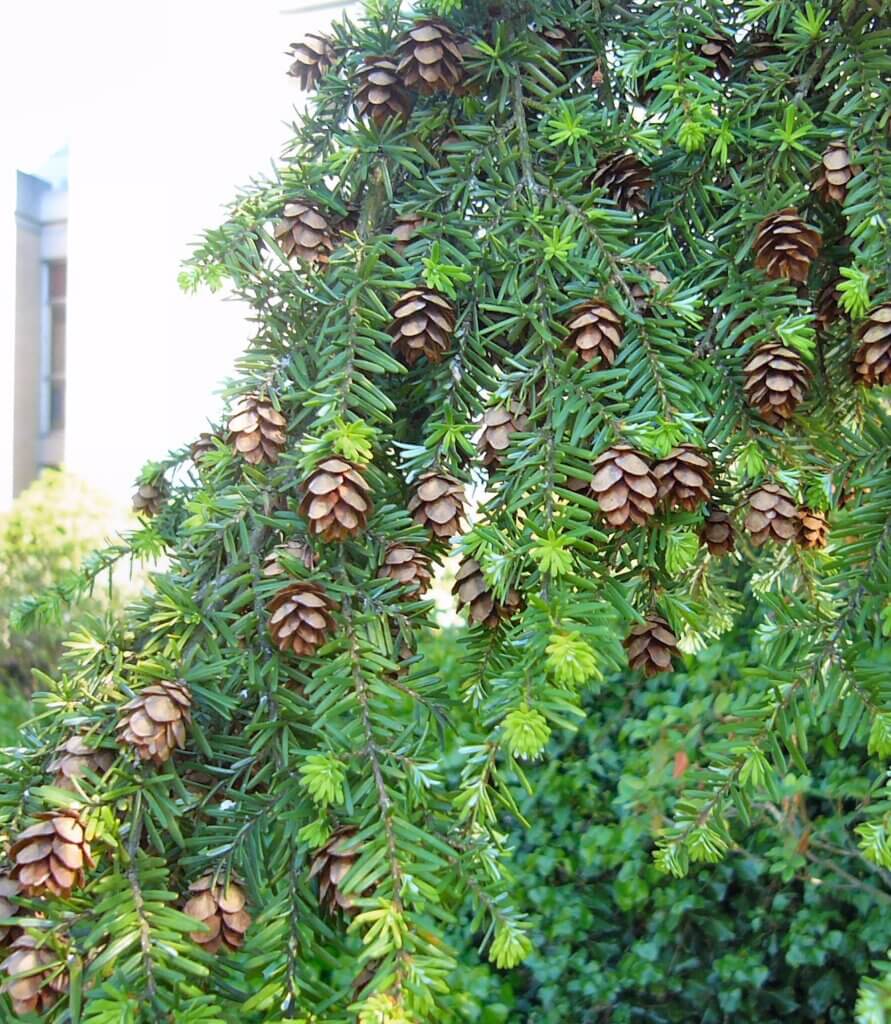
Western hemlock branch

Its flat needles resemble those of yew, but caution is advised, as yew is poisonous (except for the flesh—not the seeds—of its red cones). Hemlock needles are glossy, soft, and dark green on the upper surface, with a pale underside, measuring between ½ and 1 inch long. Yew needles have pointed tips, while hemlock needle tips are blunt. Yew also have rounded cones rather than oval ones.

Western hemlock has a narrow crown with feathery foliage on open, downward-sweeping branches. Once established and grown under the right conditions, it can thrive vigorously in sandy, loamy, or even clay soils. It is often used as an ornamental tree in wet areas and along stream banks.

Many consider Western hemlock to be one of the most beautiful evergreen trees found in Canada.

Appeared in CLG, Volume 5, Issue 1.